
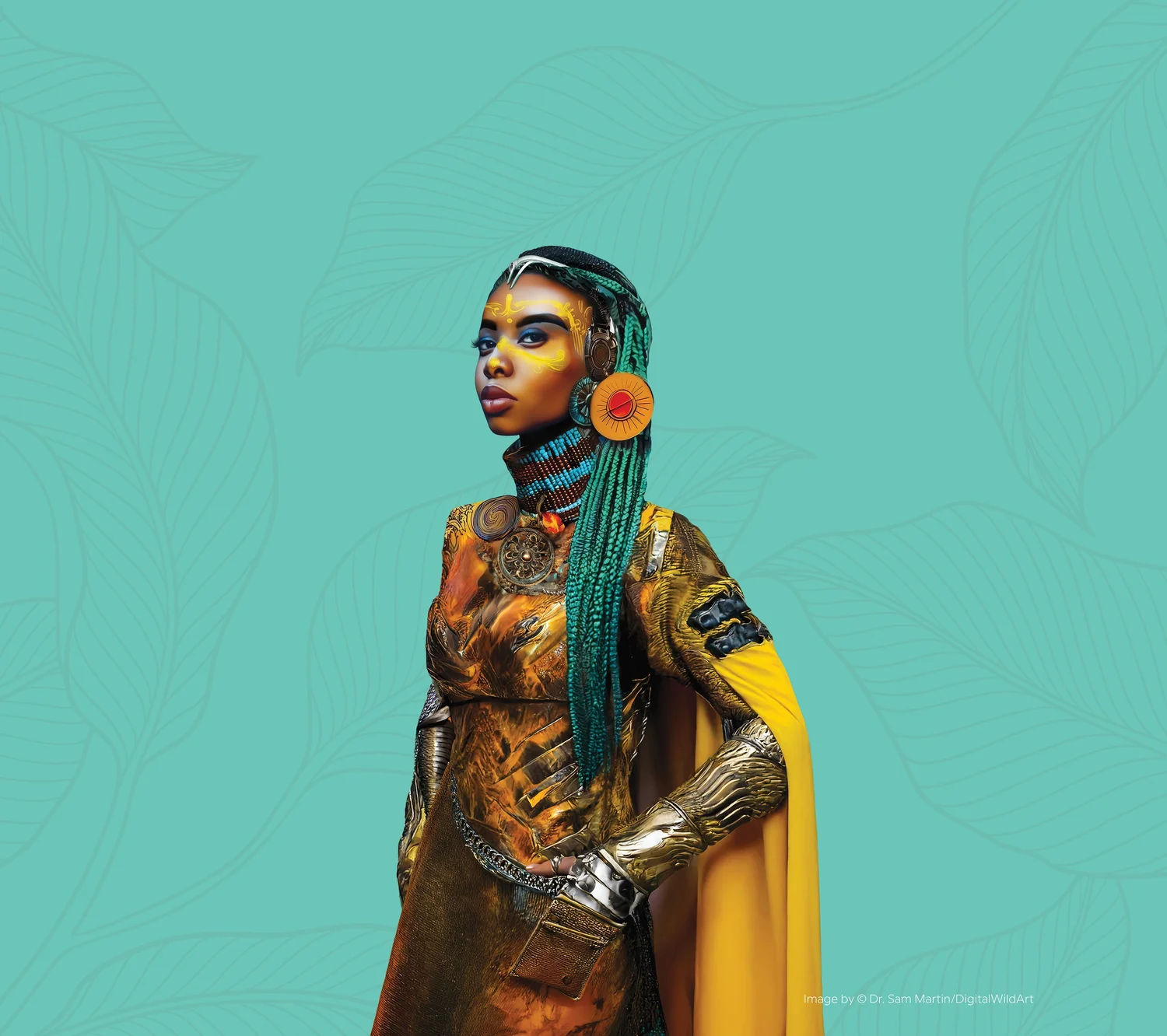
Poet.
Author.
Librettist.
Storyteller.
Oral Historian.
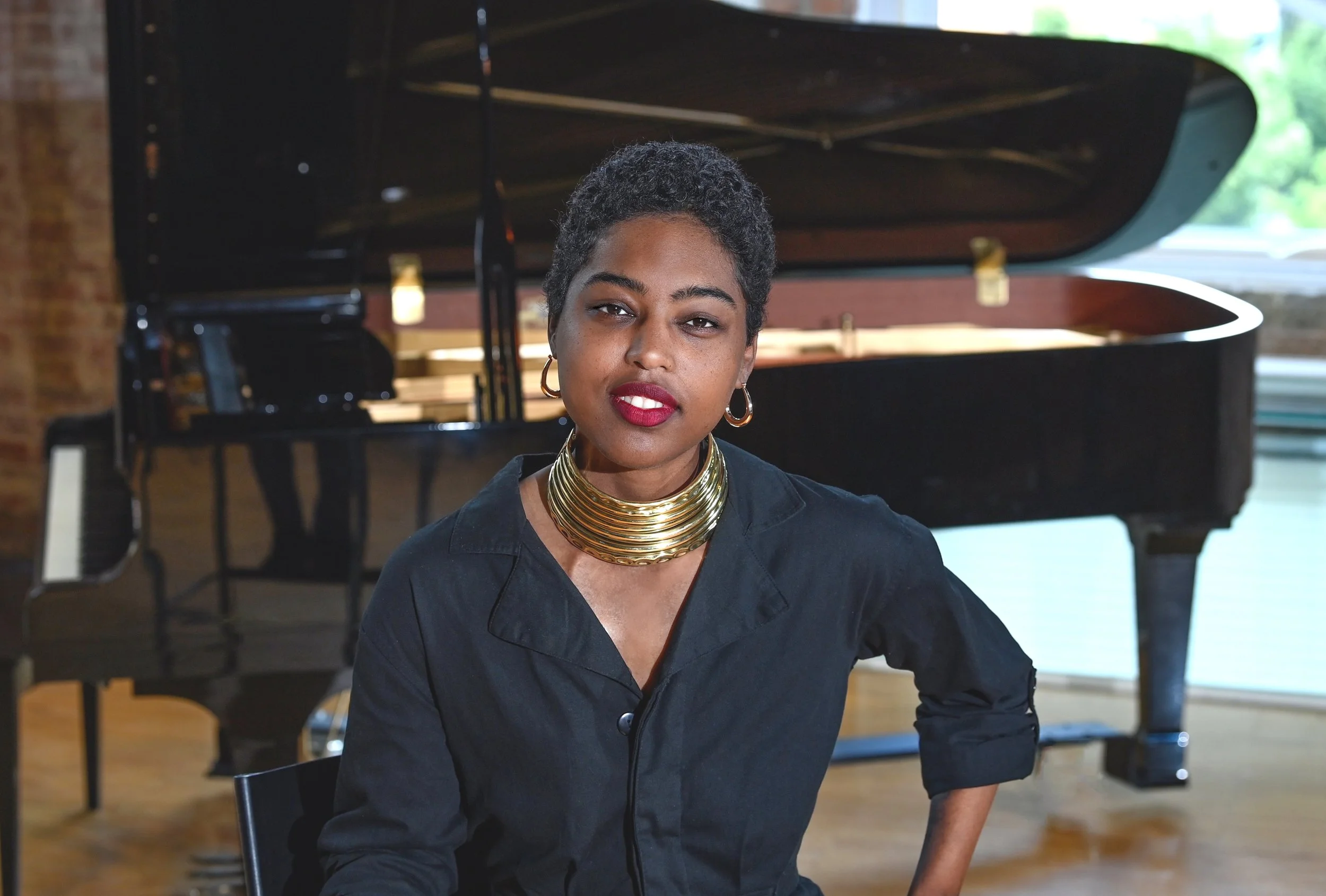
Honeysuckle Poetry is the creative home of Tifara Brown. Honeysuckle is a space where performance, story, and imagination are treated as serious tools for serious work.
For over two decades, Tifara has performed and facilitated in spaces most artists never enter: juvenile detention facilities, military commands, corporate boardrooms, and community halls from Savannah to Belfast to Accra. Her artistic practice is the method for her work, shaping cultures and facilitating belonging around the world.
Image copyright Hallowed Hue LLC 2026.
POETRY
Tifara's poetry sits at the intersection of history, grief, joy and imagination.
It is rooted in the Black American oral tradition and shaped by a lifetime of listening to communities tell their own stories.
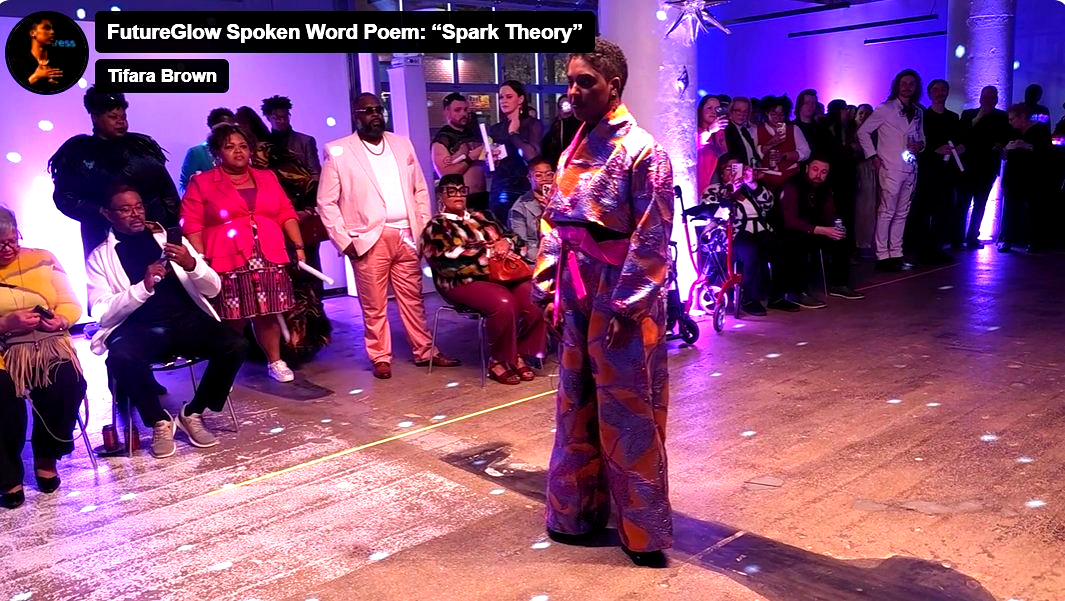
Tifara's poetry has been published in more than 10 literary journals and magazines, including Gulf Stream Literary Magazine, Sunspot Literary Journal, Minerva Rising Press, Main Street Rag, Cathexis Northwest Press, and Club Plum Literary Journal, among others.
Her debut collection, Honeysuckle: Poems and Stories from a Black Southerner, was written as a memorial to an ancestor killed by racial violence in the late 1950s. It has since been used as a tool for reconciliation in academic settings across South Georgia and Northern Ireland, and as a resource for women transitioning out of the sex industry into writing and entrepreneurship.
Her work lives at the intersection of ancestral memory, Black Southern identity, grief, humor, and radical imagination.
It names, with precision and care, what most writing leaves unsaid.
CASE STUDY
Poetry As Youth Advocacy
When young people find their voice, the world has to listen.
The Limestone United Performers read their co-created poem “The Color of Peace” at the Understanding Doesn’t Mean Agreeing: Youth Perspectives Peace Forum in Belfast, Northern Ireland.
Since 2018, Tifara has partnered with Limestone United, an at-risk youth organization in Belfast, Northern Ireland, on an ongoing storytelling and peace project that turns lived experience into performed poetry.
The process is intimate and rigorous. Tifara interviews young people about their lives and then works alongside them to shape their stories into poems. Their voices and their truth are given structure and form and a stage.
More than 75 young people have gone through this process. Their poems have been performed at international peace and leadership conferences around the world. One was recently read to Ukrainian refugees in Romania. Others have healed generational wounds in their family through their poetry. These are young people from some of Belfast's most marginalized communities now speaking on a global platform, advocating for their futures and demanding that their experiences be seen.
A peace poem entitled "The First Time Living" by Tifara Brown, read to Ukrainian refugee children in Romania.
In the rehearsal process, Catholic and Protestant girls, each carrying lived experiences shaped by interfaith violence, were brought together in a shared creative space to co-create poetry rooted in healing and collective vision. What began as a room of difference became a space of deep listening and courageous storytelling.
Through guided collaboration, these young women transformed division into dialogue, crafting pieces that not only honored their individual experiences but also reflected a unified commitment to peace.
The rehearsal itself became an act of reconciliation. Through our methodology, we equipped them with the language, confidence and solidarity to step onto a global stage as advocates—no longer defined by conflict, but by their power to imagine a different future.
OPERA
From poet
to librettist.
This is how it happened.
"I didn't set out to just write an opera. I set out to tell the truth about what Black imagination looks like when it has no ceiling."
I am a Black Southern woman. I grew up in a tradition of storytelling — of poetry passed down through kitchens and churches, of language used as both shield and sword. When Cincinnati Opera offered me a part in the Black Opera Project, I said yes because I understood the call.
There is a lineage of Black creative work that has always been ahead of its time because it refused to be confined by the present. I wanted to write something in that tradition. Something that placed Black women at the center of an epic journey and asked: What does our future look like without limits?
And then I remembered Tut.
Tut is a language indigenous to Black Americans in the Deep South. Tut was passed down from ancestors who developed it as a mechanism for learning to read and write when it was illegal for them to do so. The word for love in Tut is lalovavi. Our ancestors created a mode of communication that led to freedom and a future beyond imagination.
This truth was the spine of everything.
Persephone's story is epic, but it is also deeply personal. Writing this libretto meant sitting at the intersection of three things I care about deeply in my art: the archive of Black language, the power of Afrofuturism to imagine liberation, and the journey of a woman who refuses to let other people determine her destiny.
LANGUAGE
lalovavi
Tut · /lah-low-VAH-vee/ · "love"
LALOVAVI is the first media production in history to feature Tut. The opera is sung in both English and Tut, with projected translations, honoring the language as the living, breathing inheritance it is.
For me, working with Tut was not a stylistic choice. It was a moral one. If we are making an opera about Black futurity, Black love, and Black self-determination, then we write it in the language our ancestors made so they could be free.
A language born in secret and now for the first time sung on stage.
Origin
Developed by enslaved Black Americans as a secret literacy tool when reading was outlawed.
Legacy
Passed down orally through Black Southern families; now preserved and taught in communities across the U.S.
Set 400 years in the future. Rooted in now.
Atlas — the city formerly known as Atlanta — runs on Syndica: a gene that determines status, vitality, and longevity. Persephone, the youngest daughter of the city's ruler, discovers she carries a version of Syndica that confers immortality. Betrayed by her own family and forced to run for her life, she embarks on an epic journey that uncovers a hidden past and leads her to the true meaning of love and self-determination.
LALOVAVI is a story about what it means to possess something extraordinary in a world that will punish you for it.
It is about the people who learn to survive.
It is about love as the one force that outlasts power.
What is Afrofuturism?
Afrofuturism is a cultural and artistic movement that centers Black imagination in visions of the future. It is the process of reclaiming the right to dream forward after centuries of being excluded from narratives of progress and possibility.
It asks: What does the future look like when Black people are not just surviving in it—but building it, leading it and loving freely within it? It answers by weaving together history, technology, spirituality, and storytelling to reimagine what is possible.
Afrofuturism does not separate past from future; it honors ancestral knowledge as a blueprint for innovation, insisting that memory itself is a form of advanced intelligence.
In this way, it becomes both a creative practice and a transformational act—one that creates space for new worlds to emerge. It is not only about envisioning the future, but about shaping it with intention, beauty and power.
Afrofuturism traces back to writers such as Octavia Butler, artists such as Sun Ra, and filmmakers such as John Sayles.
Black creators placed themselves in science fiction and speculative worlds long before it was recognized as a genre.
ROOTS
Atlas is Atlanta 400 years on, complex, and governed by its own rules. The future here is not a white-walled spaceship. It is a Black Southern city, remembered and reimagined, with its own language, its own hierarchies, and its own heartbreak.
IN LALOVAVI
When Black people imagine the future, we are doing something radical: insisting we will be in it. Afrofuturism is not escapism. It is a claim on tomorrow, and LALOVAVI makes that claim in the oldest language Black Americans ever made.
WHY IT MATTERS