

Story is not a soft skill.
It is the oldest infrastructure we have.
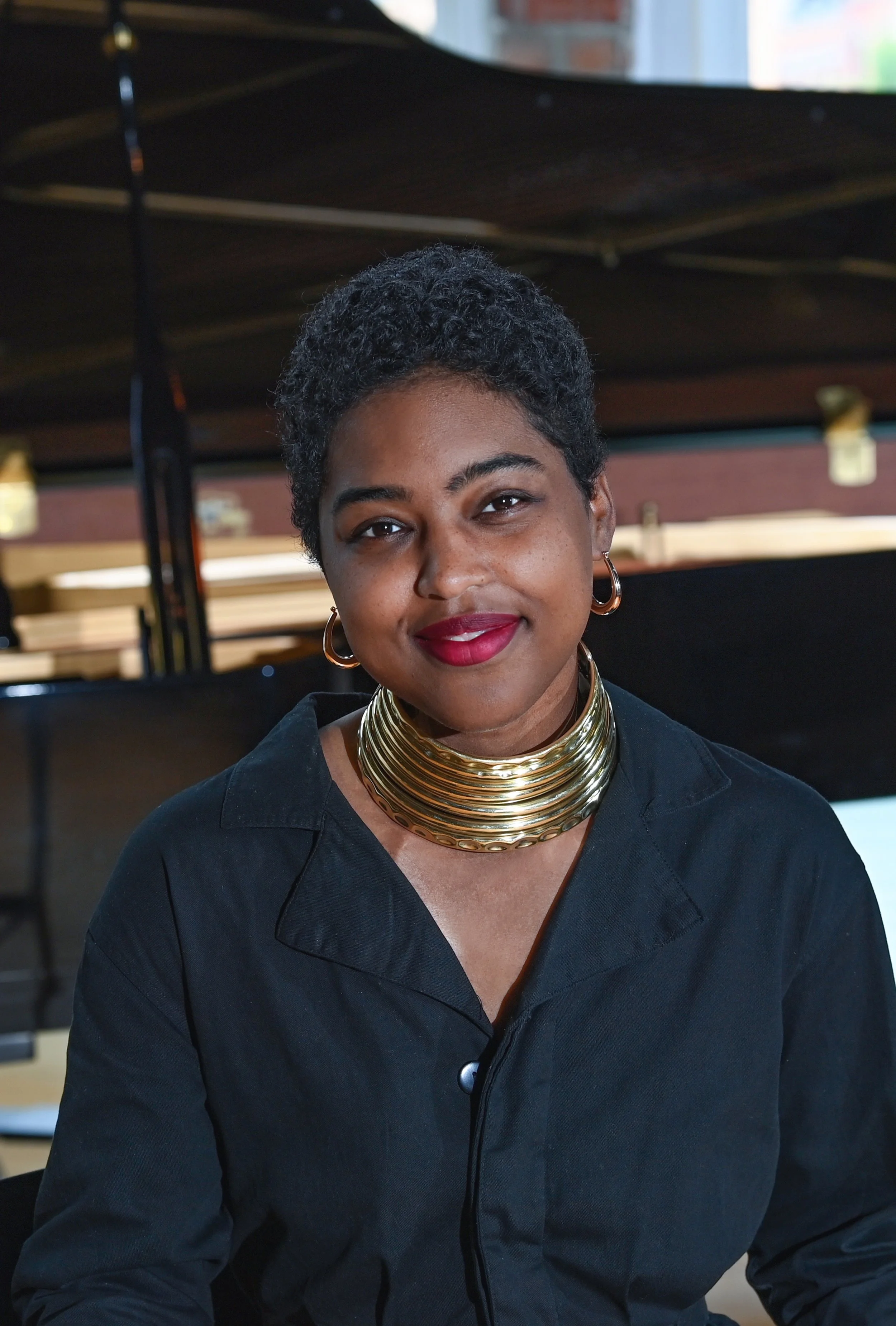
Most culture strategists study organizations. Tifara Brown has spent 20+ years living inside them: as a poet, storyteller and an oral historian who has worked across three continents and five industries.
This experience is what makes her an effective strategist. She doesn't theorize about story. She has used it to open rooms that were closed, building trust in communities that had none and creating the conditions where people feel safe enough to speak.
These talks don't simply motivate.
They shift culture in a lasting way.
Keynote
45–60 minutes
Designed to open or close a conference with something meaningful that stays. Tifara delivers from deep research and lived experience — not from slides.
Lecture & Seminar
45, 90 minutes, or 2 hours
For university and executive education settings. Research-grounded, discussion-driven, and tailored to the course or program.
Workshop
90 minutes to a half-day
Participatory, facilitated, hands-on. Audiences leave with tools they can use immediately — and a different relationship to their own voice.
Reading & Performance
Standalone commission to 90-minute set
A live poetry reading and performance from Honeysuckle and other published works.
Available standalone or paired with a talk.
Flagship Talks
Turning words into measurable impact across teams, systems and communities
FLAGSHIP TALK
Imagination As Infrastructure ©: Building Belonging Without the Political Baggage
Best for corporate and executive audiences
THE PROBLEM
Organizations need inclusive cultures to survive — but traditional DEI frameworks have collapsed under political and financial pressure. This talk introduces a research-grounded, arts-based alternative that builds psychological safety, voice equity, and creative capacity from the inside out.
THE SOLUTION
Belonging isn't built through policy. It's built through story, ritual, and shared imagination. When organizations invest in the infrastructure of the imagination — the conditions where people feel safe to think, speak, and create — they don't just improve culture. They reduce attrition, increase innovation, and build teams that stay.
WHAT YOU CAN EXPECT
A post-DEI framework that works across political and cultural divides
Concrete tools for building psychological safety at scale
Research-backed, peer-reviewed evidence linking narrative culture to employee retention
A new vocabulary for inclusion that doesn’t trigger resistance
FLAGSHIP TALK
Afrofuturism as Strategy For Imagining New Futures
Best for arts institutions, academic audiences, and organizations committed to innovation
THE PROBLEM
Most people have encountered Afrofuturism without knowing it. Black Panther. Octavia Butler's science fiction. These are not disconnected creative choices — they are expressions of a tradition that stretches back centuries. A tradition built on a radical act: Black people imagining themselves into futures that were never designed to include them. Afrofuturism actually is, where it comes from, or why it keeps producing some of the most visionary thinkers, artists, and leaders of our time.
THE SOLUTION
When organizations learn to think Afrofuturistically — to imagine beyond the limits of what currently exists, to draw on the full archive of human creativity, and to center the visions of those who have always had to build what wasn't there — they become transformational. This talk introduces audiences to Afrofuturism from the ground up, then builds a direct bridge to how its core practices apply to institutional visioning, creative leadership, and organizational culture.
WHAT YOU CAN EXPECT
A clear, accessible introduction to Afrofuturism — its history, its key figures, and why it matters now
Cultural and artistic examples spanning music, literature, film, design, and science that illuminate the tradition in action
A framework for applying Afrofuturist thinking to institutional visioning, team culture, and creative leadership
A new understanding of imagination as a discipline — and why the organizations that practice it will outlast the ones that don't
Signature Keynotes
Strategic keynotes that translate directly into measurable organizational impact
The Spoken Word As Infrastructure: How Story Builds What Policy Can’t
Best for arts, academic, and community audiences
THE PROBLEM
Drawing on oral history traditions from the American South, the griots of Ghana, and the reconciliation work of Belfast, this talk makes the case that narrative is not a soft skill. It is the oldest and most powerful technology for building trust, transferring knowledge, and transforming culture.
THE SOLUTION
Every institution — schools, companies, governments, communities — is held together by the stories people tell about it. When those stories break down, so does trust. When they are tended with care and craft, they become the infrastructure of belonging. Story is not decoration. It is load-bearing.
WHAT YOU CAN EXPECT
A new framework for understanding narrative as institutional infrastructure
Historical and cross-cultural examples of storytelling as social technology
Practical tools for leaders, educators, and community builders
A case for why storytelling belongs in every strategic conversation
The Body Knows Before the Brain: Storytelling As A Technology For Truth
Best for academic, literary, and healing-centered audiences
THE PROBLEM
Poetry is not ornament. It is precision. In this talk, Tifara explores how verse accesses memory, identity, and emotional truth in ways that prose cannot — and why that makes poetry one of the most underused tools in education, healing, and public life.
THE SOLUTION
When we invite people to write — or simply to listen — we are inviting them to locate themselves. Poetry forces presence. It asks the body to remember what the mind has learned to protect itself from. Drawing from her own published work and 20+ years as a performance poet, she shows what happens when we take the poem seriously as a tool for change.
WHAT YOU CAN EXPECT
An introduction to poetry as a tool for healing and civic life
Live reading from Tifara's published work
Accessible framework for bringing poetry into classrooms and organizations
A writing practice that participants can return to
Peace Is Not the Absence of Conflict: Storytelling Across Divides
Best for peacebuilding, justice, and international audiences
THE PROBLEM
Peace is not the absence of conflict. It is the presence of trust — and trust is built through the willingness to witness someone else's story without needing to win. When we create the conditions for honest storytelling, we create the conditions for reconciliation.
THE SOLUTION
Drawing on Tifara's direct experience with reconciliation work in Belfast and community healing in the American South, this talk examines how storytelling functions as a peacebuilding practice — not as a metaphor, but as a documented, replicable methodology.
WHAT YOU CAN EXPECT
Lessons from real peacebuilding work across three continents
A storytelling-based framework for facilitating difficult conversations
Tools for creating psychologically safe spaces in high-tension environments
A case study approach grounded in lived experience, not theory
The Business Case for Story
Turning story strategic assets at the highest levels of leadership.
Your attrition problem is a story problem. When employees don't feel seen or safe, they leave. These talks give leaders the tools to change that, without buzzwords, without compliance theater, and without starting over.
How High-Performing Organizations Use Story to Keep Talent
Best for HR leaders, executive teams, and culture architects
THE PROBLEM
Attrition is expensive. Research consistently shows that employees don't leave jobs — they leave cultures. Cultures are made of stories: the stories leadership tells, the stories that circulate in Slack channels and hallways, the stories people tell about whether they belong.
THE SOLUTION
You can't solve an attrition problem with a retention strategy alone. You solve it by building a culture where people feel genuinely seen. This requires building the organizational conditions for honest, inclusive storytelling. Story is not a soft intervention. It is the infrastructure your culture runs on. This talk diagnoses the narrative breakdown behind high turnover and gives leaders a concrete framework for fixing it.
WHAT YOU CAN EXPECT
A diagnostic framework for identifying your organization's narrative gaps
Data linking psychological safety to measurable retention outcomes
Actionable tools leaders can implement without a full culture overhaul
A new lens for understanding why your best people are the first to go
Psychological Safety Is a Story: How Narrative Tactics Reduce Attrition
Best for people ops, team leads, and DEI practitioners navigating the rollback
THE PROBLEM
Psychological safety — the belief that you can speak up without being punished — is the single strongest predictor of high-performing teams. But many organizations don't know how to build it. Psychological safety doesn't come from policy. It comes from practice — specifically, the practice of creating shared meaning through story.
THE SOLUTION
This talk makes the case that storytelling tactics are not supplemental to that work. They are the work. Through narrative-based facilitation strategies drawn from arts practice and peacebuilding, Tifara shows leaders how to create the conditions where people stay, contribute, and grow.
WHAT YOU CAN EXPECT
Research-grounded evidence linking narrative practice to team retention
Story-based facilitation tools leaders can use in the next team meeting
A framework for building inclusion that doesn't require DEI infrastructure
Case studies from organizations that have reduced attrition through culture work
Don't see exactly what you need? Tifara develops custom talks on specific themes and for specific audiences. Reach out to start a conversation.